
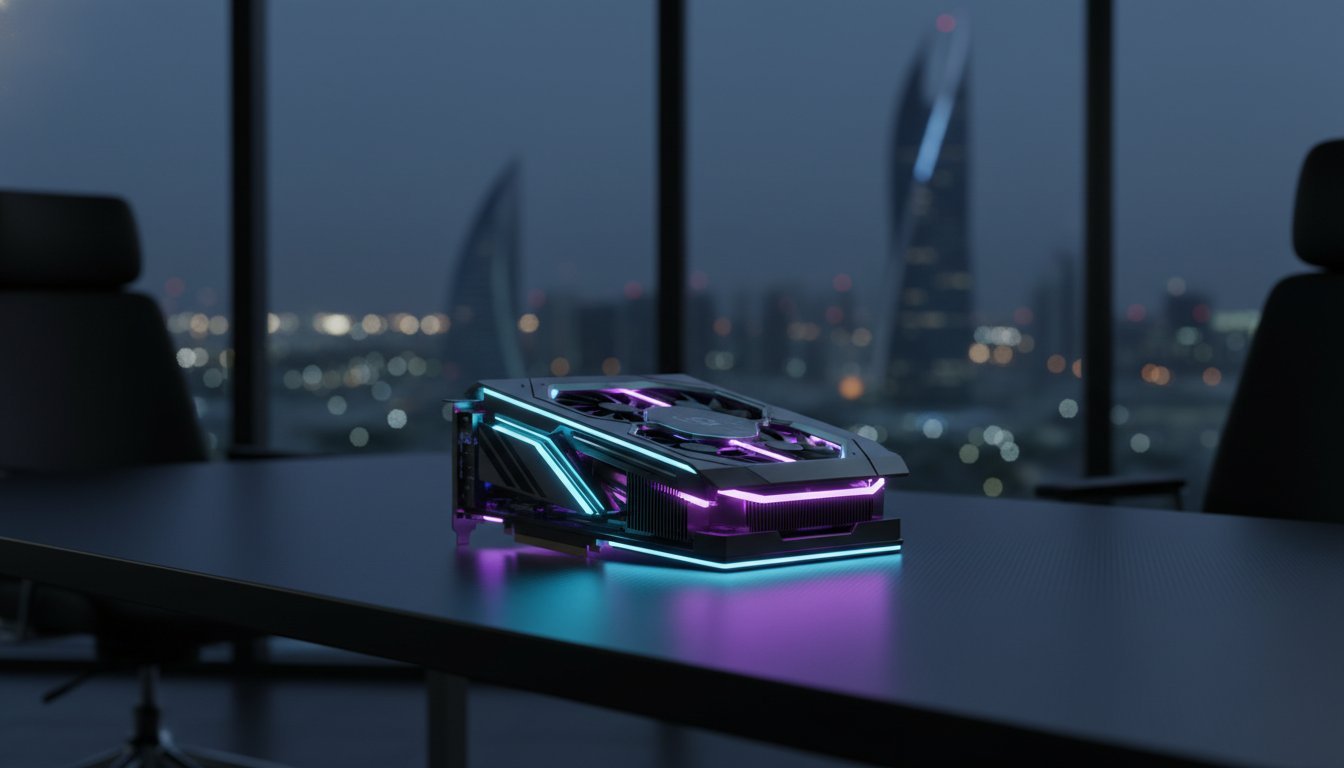

In 2026, hunting for the lowest price tag is the fastest way to turn your high-performance workstation into an obsolete relic before the year ends. With Nvidia potentially cutting consumer GPU production by up to 40% to fuel AI data centers, the hardware market is tighter than ever. You shouldn’t have to choose between overpaying for a name brand or buying a card that chokes on modern VRAM requirements. We know the frustration of balancing a budget while demanding professional-grade reliability for 3D rendering or high-refresh gaming.
You want a build that lasts. We’re here to ensure you find the best value graphics card that delivers high frames-per-dollar without the hidden costs of a forced PSU upgrade. We’ve spent years mastering the internal character of these components; now, we’re sharing that expertise to help you secure a GPU with true architectural longevity. This guide breaks down the real-world performance of the RTX 50 series and AMD’s new RX 9070 GRE to find the sweet spot for your 2026 hardware strategy.
Key Takeaways
- Define the 2026 sweet spot by prioritizing AI-driven upscaling and VRAM capacity to ensure your best value graphics card choice offers true architectural longevity.
- Navigate the high-stakes rivalry between Nvidia’s Blackwell and AMD’s RDNA 4 architecture to find the ultimate performance-per-watt leader for your next build.
- Uncover the hidden expenses of budget-tier GPUs, including the critical shift to ATX 3.1 power standards and the necessity of advanced thermal management.
- Evaluate the reality of 4K gaming versus 1440p high-refresh targets to determine which resolution delivers the most professional-grade impact for your budget.
- Learn how Grey PC’s expert component matching and local Bahrain support transform a simple hardware purchase into a reliable, high-performance workstation experience.
Defining the Value Sweet Spot in 2026: Beyond FPS per Dollar
Stop looking at raw silicon metrics as the only measure of success. In 2026, finding the best value graphics card requires a fundamental shift in perspective. The old math of simply dividing frame rates by price tags is officially dead. We’ve seen too many builders in Bahrain regret buying a “bargain” card that lacks the architectural features to survive next year’s software updates. True value now lives at the intersection of hardware power and AI-driven efficiency.
The sweet spot for most serious builds currently sits between $400 and $700. This price bracket is where you find the best balance of performance for professional 3D rendering workstations and high-refresh gaming. While it’s tempting to save money with a $300 entry-level unit, that choice often becomes the most expensive mistake you can make. These lower-tier cards frequently lack the VRAM or AI tensor cores needed to handle 2026 titles, forcing an upgrade within 18 months. We call this “Architectural Longevity.” It is the art of investing in a graphics processing unit (GPU) that maintains its utility and resale value over a three-year cycle.
The Impact of AI Upscaling on Long-Term Value
AI is the new “free” performance boost that defines modern hardware. In 2026, technologies like DLSS 5 and FSR 4 aren’t just optional settings; they’re essential for extending the life of mid-range hardware. For professionals in Bahrain using 240Hz+ gaming monitors, Frame Generation is a total game-changer. It allows a mid-tier card to punch way above its weight class, delivering fluid motion that native resolution alone couldn’t achieve without a massive price hike. Native resolution has become a secondary metric. The real value lies in how effectively a card uses AI to reconstruct frames without sacrificing visual clarity.
VRAM: The Invisible Performance Ceiling
Memory capacity is the silent killer of many “budget” builds. As of 2026, 12GB of VRAM is the absolute minimum for any respectable gaming or editing rig. If you’re aiming for a best value graphics card that stays relevant, 16GB is your true target. We’ve tested countless configurations where an otherwise powerful chip stutters and chokes because it ran out of memory buffer during a complex 4K render or a modern AAA game. This isn’t just about speed; it’s about stability. VRAM capacity is the single most important factor in determining a GPU’s resale value in the secondary market. Don’t let a narrow memory bus turn your premium investment into a bottlenecked paperweight.
The Top Value Contenders: RTX 5070 vs. RX 9070
The mid-range market has become a high-stakes duel between NVIDIA’s Blackwell and AMD’s RDNA 4 architectures. This isn’t just a battle of brands; it’s a clash of philosophies. NVIDIA bets heavily on AI and specialized tensor cores, while AMD doubles down on raw silicon power and memory bandwidth. If you’re hunting for the best value graphics card, your choice depends entirely on whether you’re chasing pure gaming frames or building a versatile hybrid workstation.
Efficiency is the new benchmark for professional builders. Both manufacturers have pushed performance-per-watt to new heights, which is vital for maintaining PSU and Thermal Management standards in a professional environment. A card that runs cooler doesn’t just save on electricity. It lasts longer and keeps your workspace quiet during intense 3D renders or long gaming sessions in Bahrain’s climate.
NVIDIA RTX 5070: The Productivity Powerhouse
The RTX 5070 stands out as the hybrid value king. While its raw rasterization is impressive, its real value lies in its CUDA cores and specialized AI hardware. For those constructing video editing workstations, the Blackwell architecture offers massive time savings. In applications like Blender or Maya, the 5070’s rendering speed often justifies its street price, which currently ranges from $629 to over $878 depending on the specific model and cooling array. You aren’t just buying frames; you’re buying back your time.
AMD Radeon RX 9070: The Rasterization Rebel
AMD remains the undisputed champion of raw VRAM-per-dollar. The global launch of the Radeon RX 9070 GRE on June 2, 2026, at an MSRP of $549, proves they’re serious about dominating the sub-$600 market. It delivers roughly 21% higher performance than the previous generation’s mid-tier competition at 1440p. For pure gamers who prioritize non-ray-traced titles and competitive esports, this is the best value graphics card available today. The open-source FSR ecosystem ensures these cards remain relevant across multiple generations, making them a safe bet for long-term ROI.
If you’re unsure which architecture fits your specific creative workflow, our specialists can help you select the perfect Grey PC Custom Build to maximize your investment.

Resolution Tiers: Finding Value at 1440p and 4K
Resolution defines your hardware’s lifespan. While 1080p is now the domain of entry-level machines, the battle for the best value graphics card has moved to 1440p. This tier provides a sharp visual upgrade without requiring a four-figure investment in your GPU. Pushing toward 4K introduces a steep curve of diminishing returns where every additional pixel costs exponentially more. For many, building the ultimate gaming pc build is about finding the hardware that maximizes a 1440p high-refresh display rather than struggling to maintain 60 FPS at 4K.
The 1440p Sweet Spot: Why it’s the Smartest Buy
The current rivalry between the RTX 5060 Ti and the RX 9060 XT highlights the 1440p dominance. The 5060 Ti relies on its superior AI suite to maintain high frame rates in modern titles. Conversely, the RX 9060 XT often leads in raw rasterization, providing a smoother experience in competitive shooters. Monitor pricing in Bahrain has shifted significantly. High-quality 1440p 240Hz+ panels are now the standard for serious enthusiasts and professional creators. You should always prioritize rock-solid frame stability and low latency over the marketing hype of 4K. A stable 144 fps at 1440p will always feel more professional and responsive than a stuttering 60 fps at a higher resolution.
Entry-Level 4K: Can Mid-Range Cards Handle It?
Budget 4K used to be a myth, but AI upscaling has changed the rules. Mid-range titans like the RTX 5070 can now deliver a 4K experience that looks nearly identical to native rendering. This makes 4K accessible to those who don’t want to spend $1,500+ on a GPU. If your work involves high-resolution assets or you’re using a Pimax Crystal Light VR Headset, you might consider the jump to an NVIDIA GeForce RTX 5090 for absolute clarity. For everyone else, the secret to value is simple. Switching from ‘Ultra’ to ‘High’ settings can boost your performance by up to 25% without ruining the aesthetic. This allows a mid-range card to provide a premium 4K experience for years to come.
Don’t fall for the “more is always better” trap. The smartest buyers in 2026 match their GPU to their monitor’s actual capabilities. If you’re running a standard 1440p screen, a flagship card is wasted money. Focus on the cards that hit your target refresh rate consistently. This approach ensures your best value graphics card investment stays relevant until your next major platform upgrade. We believe in precision over excess, ensuring every dollar spent translates directly into a better visual experience.
The Hidden Costs: Balancing PSU and Thermal Management
Buying the best value graphics card is only half the battle. If you pair a high-efficiency GPU with a failing or underpowered power supply, you’re essentially building on a foundation of sand. We’ve seen many enthusiasts in Bahrain focus entirely on the silicon while ignoring the electrical infrastructure required to keep it running. A “cheap” GPU quickly becomes a financial burden if it forces an emergency PSU replacement or, worse, triggers a system-wide failure due to transient power spikes.
The Blackwell era has ushered in the ATX 3.1 standard, which is non-negotiable for modern high-performance builds. These new power supplies are designed to handle the massive, microsecond-long surges that 2026 graphics cards demand. While you might not need the extreme wattage found in the psu requirements for rtx 4090, the logic of headroom remains the same. Investing in a quality unit now prevents the “double-buy” scenario when you decide to upgrade your components in two years.
Power Supply: The Foundation of GPU Value
Precision is key when calculating your total system draw. Don’t just guess. Add the TDP of your processor, GPU, and peripherals, then add a 20% safety margin. This ensures your PSU operates within its peak efficiency curve, typically between 40% and 60% load. While 80+ Gold is the industry standard for value, Platinum ratings offer long-term savings for professional workstations running 24/7. High-quality Power Supplies for Computers are the unsung heroes that protect your expensive internal components from Bahrain’s occasional grid fluctuations.
Thermals and Airflow: Protecting Your Investment
Heat is the silent enemy of silicon longevity. In a climate like Bahrain’s, your GPU’s cooler design is a critical part of its value proposition. A triple-fan array offers significantly better thermal overhead than a standard blower-style card, allowing for higher sustained clock speeds without thermal throttling. You must also decide between liquid cooling vs. air cooling based on your case dimensions and workload intensity. A well-ventilated case with high-static-pressure fans is the most cost-effective “accessory” you can buy. It ensures your best value graphics card doesn’t just perform well today but continues to deliver peak frames for its entire three-year lifecycle. We treat thermal management as a transformative craft, ensuring every build we touch breathes as well as it performs.
Why Grey PC is Bahrain’s Destination for GPU Value
Securing the best value graphics card isn’t just about finding the lowest price on a spec sheet. It’s about the craftsmanship behind the build. At Grey PC, we don’t just sell components; we understand the internal character and soul of the technology. A GPU is a precision instrument that requires expert calibration to reach its full potential. We bridge the gap between raw hardware and peak performance through rigorous testing and surgical component matching that mass-produced retail units simply can’t match.
Our process goes beyond simple assembly. We optimize every GPU for Bahrain’s specific environmental challenges. This includes fine-tuning voltage curves and custom fan profiles to ensure your card runs cool during the most intense summer heat. By undervolting where appropriate, we reduce power consumption and heat output without sacrificing a single frame. This professional-grade optimization extends the lifespan of your investment, ensuring your hardware remains a high-performance asset for years to come.
Bespoke Assembly vs. Mass-Produced Prebuilts
Generic retail PCs are often plagued by hidden bottlenecks that choke even the most powerful GPUs. We eliminate these performance gaps by hand-selecting every part of the ecosystem. Whether you are weighing the benefits of custom gaming desktops or high-end workstations, the value of a bespoke build is clear. We pair your best value graphics card with high-speed DDR5 RAM and optimized motherboards to ensure zero data congestion. This holistic approach ensures that every Bahraini Dinar you spend translates directly into on-screen power, rather than being wasted on imbalanced components.
Expert Consultation and National Support
Navigating the hardware landscape of 2026 requires more than just a search engine. It requires a mentor. Our team acts as a trusted partner for the Bahraini tech community, offering a sophisticated level of support that global retailers can’t provide. When you buy from us, you aren’t just getting a box; you’re gaining access to professional servicing and local warranty support that keeps your machine in peak condition. We value quality over quantity and precision over generic solutions. Build your high-value rig with Grey PC today and experience the difference that expert craftsmanship makes in your hardware journey. Let’s collaborate to create a machine that reflects your professional identity and enthusiast passion.
Secure Your Architectural Longevity
Mastering the 2026 hardware market requires looking beyond the sticker price. True value is no longer a simple calculation of frames per dollar. It’s a strategic investment in AI-driven upscaling, sufficient VRAM, and the thermal resilience needed to survive Bahrain’s climate. Choosing the best value graphics card means selecting a component that grows with your workload rather than becoming a bottleneck in your creative or gaming journey. We’ve explored how the right balance of PSU standards and cooling can protect your investment for years to come.
Don’t leave your performance to chance with mass-produced prebuilts. Our team lives and breathes the internal soul of high-performance workstations. We provide national Bahraini technical support and expert-led custom assembly to ensure your machine is a bespoke masterpiece. Consult with Grey PC builders to find your perfect GPU value and let’s transform your technical setup into a competitive advantage. Your next great build starts with a partner who values precision as much as you do.
Frequently Asked Questions
What is the best value graphics card for 1440p gaming in 2026?
The AMD Radeon RX 9070 GRE is currently the strongest contender for 1440p dominance. With an MSRP of $549, it provides raw rasterization performance that outclasses many higher priced competitors. It offers 12GB of GDDR6 memory, which is perfect for maintaining high frame rates on standard 1440p monitors in Bahrain. If you prioritize AI features, the RTX 5070 is a strong alternative at a slightly higher street price.
Is it worth buying an older RTX 40-series card for value now?
Buying an older RTX 40-series card is rarely the smartest move in 2026 unless you find a clearance price well under $300. The architectural gap between Ada Lovelace and the new Blackwell series is significant. Newer cards offer vastly superior AI upscaling and better power efficiency. This translates to a much longer usable lifespan, making the initial investment in current gen hardware more cost effective over time.
How much VRAM do I actually need for gaming in 2026?
You need at least 12GB of VRAM for a smooth 1440p experience in 2026. While 8GB was once the industry standard, modern AAA titles and professional rendering workloads now routinely exceed that buffer. Targeting 16GB is the most reliable way to ensure your best value graphics card remains relevant. Don’t settle for less if you want to avoid stuttering in high resolution textures.
Does a more expensive GPU brand offer better value than a budget brand?
Premium brands often provide superior cooling arrays and longer warranties, but the underlying silicon chip remains identical to budget versions. Value is usually found in the middle of the market. We recommend choosing a triple fan model with a reputable local warranty in Bahrain. Avoid paying a $100 premium just for aesthetic lighting or extreme factory overclocks that offer negligible performance gains.
Can a value graphics card handle professional 4K video editing?
A mid-range best value graphics card like the RTX 5070 can absolutely handle professional 4K video editing. Its dedicated hardware encoders and CUDA cores are specifically designed to accelerate timelines in Premiere Pro and DaVinci Resolve. You don’t need a flagship card for most 4K projects. You simply need enough VRAM and a modern architecture to handle your effects buffer and real time playback.
What happens if my power supply isn’t strong enough for my new graphics card?
An insufficient power supply will cause sudden system shutdowns or “Blue Screen of Death” errors during heavy gaming or rendering loads. Modern GPUs have transient power spikes that can easily overwhelm older PSUs. This instability can eventually lead to permanent hardware damage. Investing in a high quality ATX 3.1 power supply is a mandatory step to protect your new internal components from electrical failure.
How does ray tracing impact the value proposition of a GPU?
Ray tracing shifts the value proposition heavily toward NVIDIA’s Blackwell architecture. If you prioritize cinematic lighting and realistic shadows, the specialized RT cores in the RTX 50-series provide a much smoother experience. For users who prefer raw frames in competitive esports, however, the extra cost of ray tracing hardware might not represent the best value. It’s a choice between visual fidelity and raw speed.
Why should I buy my GPU from a specialist like Grey PC instead of a general retailer?
Specialists like Grey PC offer expert led custom assembly and rigorous testing that general retailers can’t provide. We understand the internal character of every component and optimize fan curves for Bahrain’s unique climate. You receive a machine that is hand tuned for performance rather than a generic box pulled from a shelf. Our local support ensures your hardware investment is protected by professionals who know your build inside and out.